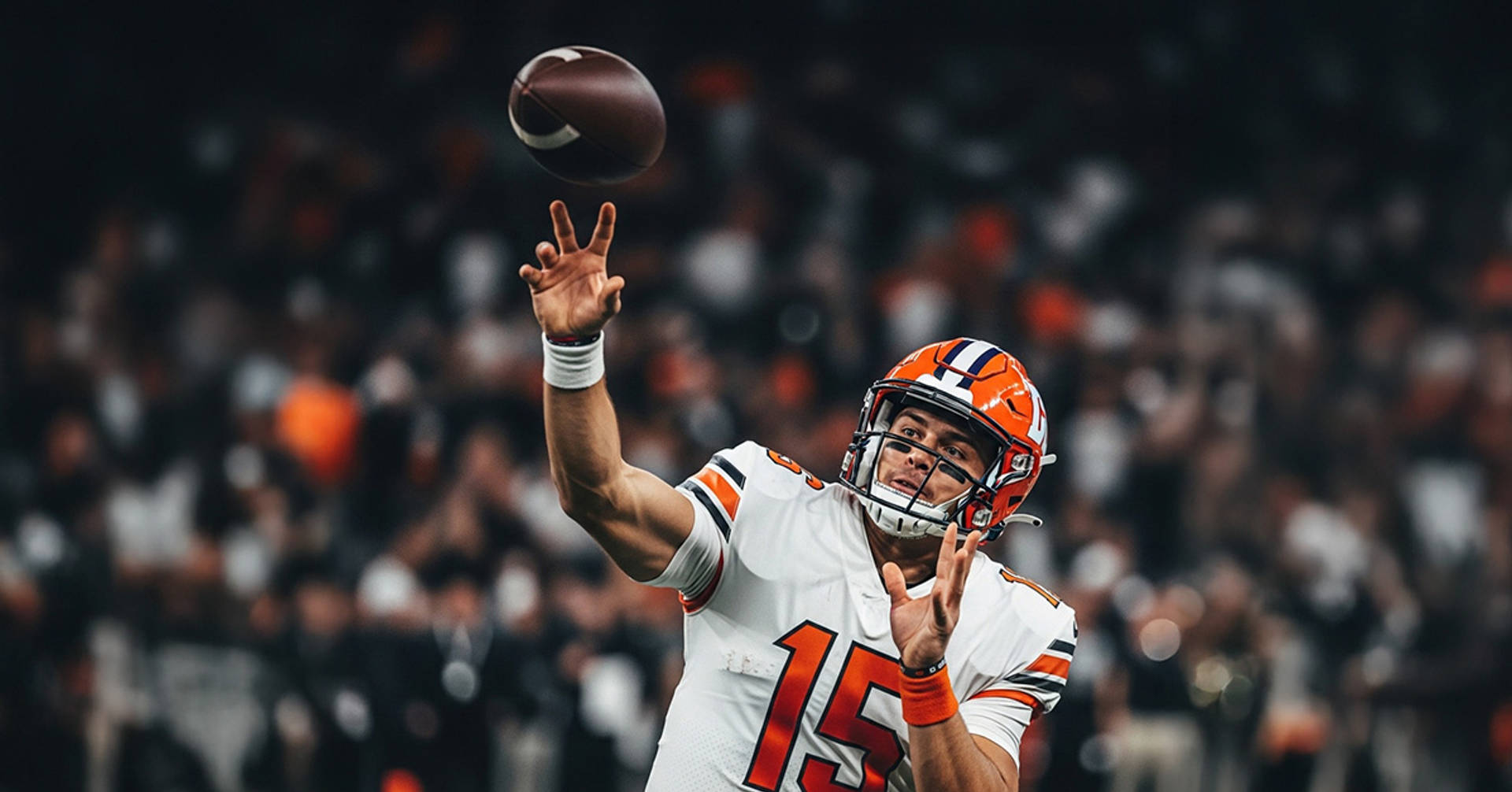
The “Revenge Game” Narrative: Fact or Fiction?
When NFL players face their former teams, the game usually carries a little extra heat, with everyone watching to see if that extra emotion shows on the field. Fans picture a player chasing payback after being traded or let go, and they expect the kind of performance that feels personal. Big revenge games are easy to remember because of the attractive narrative of haunting your former employer, but are they really that common?
We have tested this idea with results from the last decade, focusing on the cold, hard facts as opposed to selecting five games you’ll all remember. You’ll see when the situation creates extra opportunities, and when the game plan and game script keep things the same as usual.
By the end, you’ll know when the revenge talk deserves weight and when it should be ignored, especially when you’re judging player props.
The “Narrative” vs. the Math
Revenge games naturally get attention because the biggest examples are memorable, especially when a player posts numbers that look like a statement. Steve Smith Sr. crushed Carolina for 139 yards and two touchdowns after his release, and Brett Favre threw three touchdowns to beat Green Bay in his first game against them as a Viking.
Those blowups feel like proof that extra motivation changes everything, so the storyline sticks. The problem is that highlight performances are the ones we replay, while many players hoping to deliver the same level of revenge end up falling way short.
That memory gap is the whole trick, and it’s why people keep asking do NFL players perform better against former teams? We build a clean story, then check the games that fit it, and we rarely talk about the many matchups where a player looks pretty normal against his old team.
After the game, the narrative also becomes hard to pin down, since a great performance gets labelled as revenge and a poor one gets brushed off as nerves or a matchup. That is why the hype around NFL players against former teams can feel stronger than the real pattern.
When you test the idea with numbers, the boost looks smaller than the hype suggests. A 10-year analysis (2015–2024) found quarterbacks beat their season average in only 17 of 49 revenge starts (about 35%), while WR, RB, and TE were close to a coin flip at 190 of 384 (49%). In other words, if you’re asking, do NFL players perform better against former teams, the safest answer is that it happens sometimes, but it’s not something you can count on.
The Positional Breakdown
When NFL players against former teams line up, the “revenge game” idea does not land the same way for every position. A player’s role decides how much extra motivation can actually turn into touches and scoring chances.
That is why the better question is, do NFL players perform better against former teams only in certain spots, not across the board? Below is where the narrative tends to have real support, and where it usually turns into noise.
Wide Receivers - FACT (Often True)
When a player lines up against his old team, the wide receiver is where the “revenge game” idea can actually show up because touches are easy to create. Coaches can script early throws, and quarterbacks can keep going back to one motivated target on third downs and near the goal line.
That built-in opportunity is why receivers pop more often than other positions in these matchups, and a 10-year sample found 94 wideouts beat their season average against a former team. It still isn’t automatic, but it is the clearest spot where the storyline can match how an offence works.
Here are a few wide receivers who faced their former team and turned the moment into a big performance:
- Jerry Jeudy vs. Broncos (2024): After being traded to Cleveland, Jeudy erupted against Denver in Week 13 with nine catches for 235 yards and a touchdown, even in a Browns loss
- Jarvis Landry vs. Dolphins (2019): In his first crack at Miami after leaving, Landry went 10 catches, 148 yards, and two touchdowns
- A.J. Brown vs. Titans (2022): After the trade, Brown lit up Tennessee for 8 catches, 119 yards, 2 TDs, with Philly staying on him until the point was made.
- Steve Smith Sr. vs. Panthers (2014): After Carolina released him, Smith came back with Baltimore and posted 7 catches, 139 yards, 2 TDs in the classic “you let me go” performance.
Quarterbacks – FICTION (Mostly a Myth / Neutral)
Because quarterbacks handle the ball on every snap, it's easy to think they can take over a game against an old team, but the position doesn't work that way in real life. A quarterback still has to live within protection, play design, and what the defence is giving him, and when he tries to force the moment, the mistakes usually show up fast through bad throws or turnovers. Even when the emotions are high, most quarterbacks end up playing a game that looks a lot like their normal week.
When you look at NFL players against former teams, quarterbacks are the least likely group to show a consistent “revenge” boost, with only about 35% beating their season average in one 10-year sample. The storyline tends to be louder than the stat line, and the most talked-about return games often turn into tight, ordinary contests instead of fireworks.
Here are a few quarterback return games that show why the “revenge” label usually sounds bigger than the performance.
- Tom Brady vs. Patriots (2021): The build-up was massive, yet the game stayed low-scoring, Brady threw no touchdowns, and Tampa escaped 19-17 on a late field goal
- Baker Mayfield vs. Browns (2022): The spotlight was intense, Mayfield was fine rather than dominant, and Carolina still lost on a last-second kick despite him leading a late drive
- Sam Darnold vs. Jets (2021): He played one of his better games and won 19-14, but it looked like a solid system game rather than a takeover
- Taylor Heinicke vs. Panthers (2021): One of the rarer cases where a former backup popped in his return, which shows how unpredictable quarterback “revenge” really is
Running Backs - FICTION (Mostly False)
When a running back sees his old team, the “revenge game” angle usually stays small because his production depends on blocking and play calls, plus how the score shapes the day. A back can feel fired up, but he still needs lanes to open and a game plan that keeps feeding him carries; defences can also load the box if they sense what is coming. That is why this spot tends to look like any other matchup for most runners, even when the story feels personal.
That shows up in the numbers, since a 10-year sample found only 53 running backs beat their season average in revenge spots out of 384 skill player cases, which is a smaller share than wide receivers. When a big RB payback game does happen, it often comes from one long run or a surprise workload that has more to do with the matchup than emotion. There are a few exceptions, yet plenty of hyped returns end with ordinary stat lines or even bad luck.
Here are a few running back return games that show how swingy this spot can be.
- Brandon Bolden vs. Patriots (2018): After leaving New England, he had two carries for 60 yards and two touchdowns for Miami, including a 54-yard touchdown run
- Isaiah Crowell vs. Browns (2018): Facing Cleveland as a Jet, he had 16 carries for 34 yards but scored two rushing touchdowns
- James Conner vs. Steelers (2023): In Week 13 (Dec. 3, 2023) with Arizona, he handled 25 carries for 105 yards and two touchdowns in a plan that leaned on him
- Lamar Miller vs. Dolphins (2018): With Houston against Miami, he finished with 133 total yards and a touchdown in one of the cleaner revenge hits
- Le’Veon Bell vs. Steelers (2019): After all the buildup, he ran 25 times for 72 yards (2.9 yards per carry) with the Jets, and the “revenge” never turned into a big box score
- Emmitt Smith vs. Cowboys (2003): The return to Dallas ended early after 6 carries for minus 1 yard because he got hurt
- Dion Lewis vs. Patriots (2018): Tennessee won 34-10 while Lewis had 68 total yards with no touchdowns.
The Revenge Factors for Coaches
When a coach faces the team that fired him or pushed him out, the edge can show up in the game plan because he manages the calls. Instead of playing it safe, he may keep attacking if he smells a chance to make a statement. These spots are harder to measure with clean numbers because they do not happen often, but the idea sticks because the coach can affect every part of the game.
History helps explain why people believe in coach revenge, with Jon Gruden’s Buccaneers crushing the Raiders in Super Bowl XXXVII being the clearest example. Mike Shanahan also spent years beating Oakland and rarely seemed interested in easing up when Denver had control. Rex Ryan’s meetings with the Jets had that same personal feel, even when the score stayed close. For betting or props, this angle fits team totals and spread options better than guessing one player will suddenly produce a huge day.
Happy Reunions
Happy reunions happen when a player or coach faces a former team with no real bad blood, so the vibe is respect and nostalgia rather than payback. In those games, tribute videos and friendly receptions can matter more than anger, and the emotion can lead to a slower start or just a normal stat line instead of a spike.
Peyton Manning’s return to Indianapolis and Tom Brady’s first game back in New England fit this mould, along with plenty of fan-favourite returns where the crowd cheers instead of boos. For bettors, the key is not assuming “extra motivation” just because it’s an old team, since without a grudge, there’s usually no reason to force touches or chase a statement.
How to Bet on the Revenge Game
When NFL players against former teams get the spotlight, the betting market often moves on the storyline before it fully accounts for the matchup. That’s why the smarter approach is to focus on angles a team can actually control, like red-zone usage, scripted early touches, and play design.
Props and short windows often fit this better than full-game bets, because any emotional edge can show up early and fade once the game settles. Anytime touchdown props and first-quarter or first-half lines can make sense in the right spot, while full-game moneylines and big overs are where the narrative can burn you if the matchup is poor or the price has already moved too far.
A smart plan might be:
- Anytime TD (WR X): Target an anytime touchdown prop (like +140) if the offence has clear red-zone usage for him and a reason to feature him near the goal line
- Yards over (small): Take a smaller play on his receiving yards over only when the coverage matchup is friendly, with a first-half yards over as the safer version if you expect an early push
- Early team total/1Q over: Consider a first-quarter team total or 1Q over when you expect scripted touches and a fast start built around him
- Skip ML based on the story: Avoid taking the moneyline or spread just because the angle is fun, because a player can still hit props in a loss if the overall matchup is against his team
- Watch the market: If the line shifts hard on narrative money, value can show up on the other side or in alternate lines once the number gets inflated