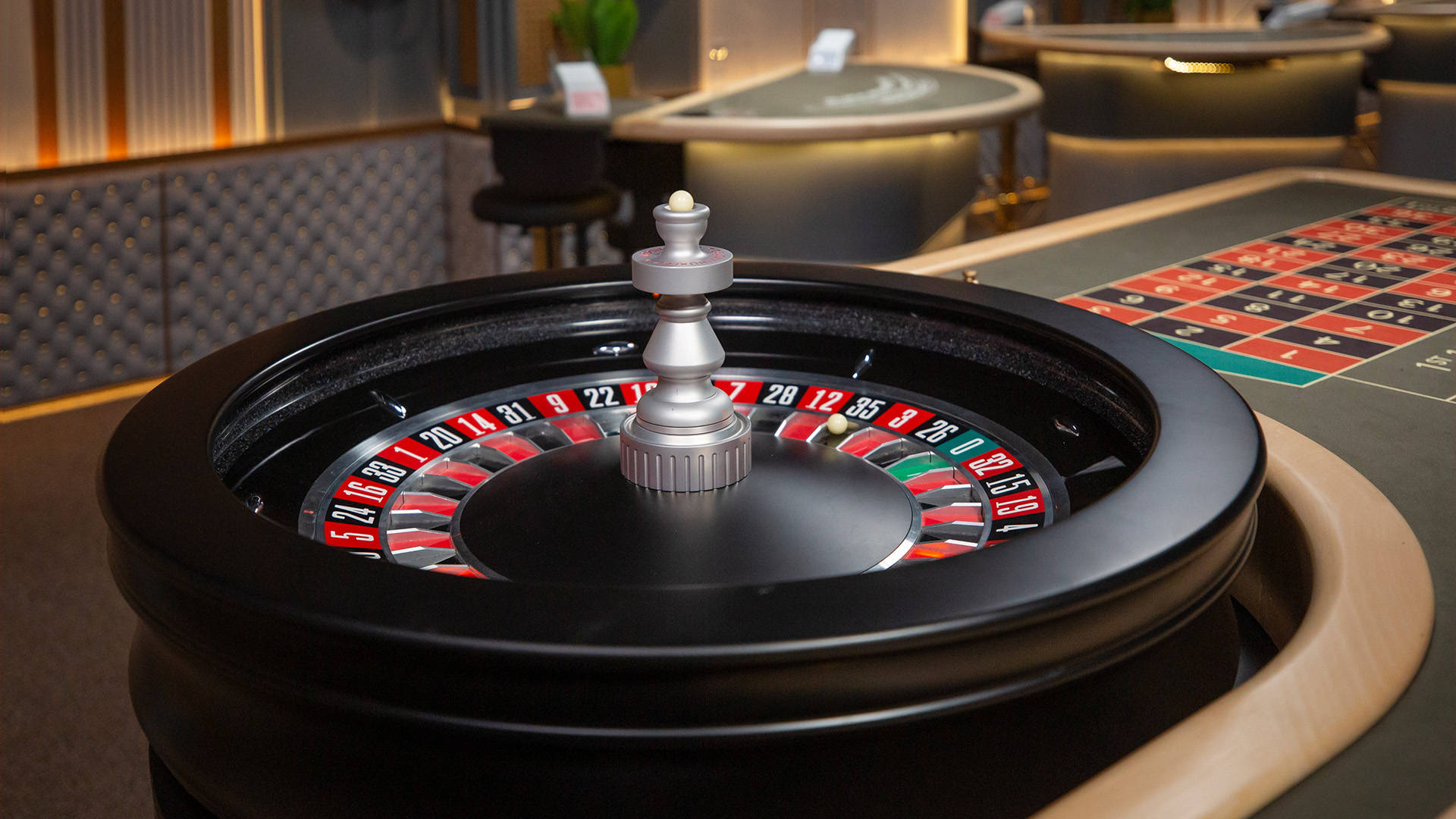
The 666 Roulette Strategy: How to Cover 90% of the Wheel
If you’ve played roulette before, you may have heard of the 666 roulette strategy. This guide shows how to place the layout, what it covers, what you typically net on hits, and the risks that come with frequent small wins.
We’ll break down win/loss probabilities, show the per-outcome payouts (red, splits, straight-ups), compare 666 to Martingale and Fibonacci methods, and finish with practical tips on bankroll, unit sizing, and picking the right wheel. Availability and bet limits vary by table; always check house rules first.
Throughout, keep in mind that no staking system can beat the house edge in the long run; the aim here is to understand the pattern of the 666 roulette strategy, not to promise profits.
How the 666 Strategy Works (the Mechanics)
The idea is simple: Spread 66 one-unit chips with the aim of winning a little on most spins and accepting a full loss on a few.
Using $1 units, you’ll put most of your stake on an even-money colour to sweep up half the wheel, use six specific splits to protect zero and a band of black numbers, then back three additional uncovered black numbers straight up.
The three single numbers are the only part you choose; pick any uncovered black pockets.
Place the bets as follows:
- Place $36 on red (even-money).
- Place $4 on each split: 0/2, 8/11, 17/20, 26/29, 10/13, 28/31.
- Choose any three still-uncovered black numbers and place $2 straight up on each.
- Spin.
On a European wheel, this covers 33 of 37 pockets: all 18 reds via the Red bet; zero plus 11 black numbers via the six splits; and 3 more blacks via your straight-ups, about 89% of outcomes. The trade-off is clear: if any of the four remaining uncovered black numbers land, you lose the full $66.
Otherwise, any covered hit, red, one of the split numbers (including 0), or one of your three singles, nets about +$6. On an American double-zero wheel, you still cover 33 numbers but out of 38, so the coverage share is lower and the swings a touch harsher.
If you want to spread risk, pick your three singles far apart on the wheel (for example, different dozens) so one neighbour section doesn’t carry all of your uncovered exposure.
The Math: Odds, Payouts, and Risk
Figures below use $1 units ($66 total) and European (37) vs American (38) wheels; results are rounded.
Odds
With the 666 layout on a European wheel, 33 of 37 numbers are covered, so the win probability is 33/37 ≈ 89.2%, and the loss probability is 4/37 ≈ 10.8%.
On an American wheel, you still cover 33 numbers, but out of 38, so the win probability is 33/38 ≈ 86.8%, and the loss probability is 5/38 ≈ 13.2%. Those uncovered pockets are the only spins that lose the entire $66 stake.
Payouts
Payouts line up with the "$66 to make about $6" idea.
- When any red number hits, the $36 even-money bet wins $36 while the six $4 splits ($24 total) and three $2 singles ($6 total) lose, for a net of +$36 - $30 = +$6.
- When a covered split hits (including 0 via the 0/2 split), that $4 bet pays 17:1 = $68 profit; the red ($36), the other five splits ($20), and the three singles ($6) lose, for a net of +$68 - $62 = +$6.
- When one of your straight-ups hits, the $2 at 35:1 pays $70 profit; red ($36), six splits ($24), and the other two singles ($4) lose, for a net of +$70 - $64 = +$6.
In short, almost every covered outcome returns roughly +$6; the uncovered pockets cost -$66.
Risk
Risk comes from that trade-off.
The expected value per spin equals the house edge times your total staked amount, so on a European wheel, the long-run EV is (33/37 × $6) + (4/37 × -$66) = -$66/37 ≈ -$1.78 per spin (about -2.7% of $66).
On an American wheel, it’s (33/38 × $6) + (5/38 × -$66) = -$132/38 ≈ -$3.47 per spin (about -5.26% of $66).
Variance is the second part of the picture: because wins are small and losses are large, results feel smooth until an uncovered number lands, at which point you give back many small gains in one hit. Streaks of uncovered outcomes are rarer but not impossible, so bankroll swings can be sharp; that’s the inherent cost of aiming for frequent small wins with occasional full-stakes losses.
Over a short set of spins, the same house edge can feel very different.
With $1 units on a European wheel, the long-run expectation is about -$1.78 per spin, but blocks of 10-20 spins will swing around that mean.
A common 10-spin block is nine wins and one uncovered pocket: nine × +$6 = +$54, then -$66, for -$12 overall. If you avoid the uncovered pocket in those 10 spins, you’re roughly +$60; if you hit two uncovered pockets, you’re roughly -$72.
For example, over 20 spins, 18 hits, and 2 uncovered pockets land around -$24; 19 hits and 1 uncovered pocket land around +$48; 17 hits and 3 uncovered pockets come in around -$96.
None of this changes the maths, it’s just how fixed-payout games express variance when wins are small, and losses are chunky.
As with any roulette strategy, plan unit size and session length with that rhythm in mind, and resist the urge to speed up or increase stake size after an uncovered pocket lands.
Pros and Cons of the 666 System
Before you use 666, be clear about the trade: a high hit rate in exchange for small capped wins and occasional full-stakes losses.
Pros
The chief upside is frequency.
Covering roughly nine spins out of ten on a European wheel delivers regular feedback and reduces the "miss, miss, miss" stretches.
The staking is simple, repeatable, and unit-based, so it scales cleanly to table minimums and keeps decisions light once the layout is learned. There’s modest flexibility too: the three straight-ups let you personalise coverage without breaking the structure.
Cons
The math never blinks.
You’re staking a relatively large total each spin for a capped net of about one unit on most wins, while a handful of uncovered pockets cost the full layout, negative skew that can erase long runs of small gains in a few hits. Absolute expected loss scales with your total stake, so even with the same house edge, $66 per spin bleeds faster than smaller, simpler bets.
Variance still bites: streaks of uncovered numbers are rare but inevitable, and the American wheel’s extra zero makes the trade-off worse.
Finally, the time and focus needed to place multiple chips each spin can add friction and mistakes at busy live tables.
666 Strategy vs Other Systems
Plenty of roulette strategies exist; progressions like Martingale and Fibonacci, coverage layouts like 666, but none can overcome the house edge.
What they actually do is reshape how variance feels: how often you win, how big wins and losses are, and how quickly bankroll or table limits come into play. With that in mind, here’s how 666 compares to two of the most popular progressions.
Vs. Martingale
Martingale places a single even-money bet (for example, red) and doubles the stake after each loss so that the first win recovers all previous losses plus one unit. It produces long stretches of small, steady wins punctuated by rare but very large losing sequences when you hit the table limit or your bankroll ceiling.
A modest $5 base can escalate quickly on a cold run ($5 → $10 → $20 → $40 → $80 → $160 → $320 → $640…), and one more loss at that point can end the progression.
The 666 system, by contrast, flat-stakes a fixed $66 and spreads it across much of the layout.
You never face runaway bet sizes or table-limit pressure, but your upside per winning spin is capped at roughly +$6, and an uncovered number costs the full $66. Both systems retain the same house edge; Martingale concentrates risk into rare, massive bets, while 666 distributes it into frequent small wins with occasional full-stakes losses.
Vs. Fibonacci
Fibonacci also targets an even-money bet, but increases stakes more gently by stepping through the Fibonacci sequence after losses (1, 1, 2, 3, 5, 8, …) and moving back two steps after a win.
It’s less explosive than Martingale, so peak stakes are usually lower for the same losing streak, but the core issues remain: long losing runs happen more often than intuition suggests, and table limits or bankroll limits still stop recoveries.
Compared with Fibonacci, 666 is simpler and steadier. There’s no chasing: every spin costs $66, most wins net about $6, and the risk profile is transparent from the outset. The trade-off is ceiling versus smoothness: Fibonacci can deliver larger "catch-up" wins when a sequence ends, at the price of sequences that occasionally grow uncomfortably long; 666 avoids that escalation but accepts that a single uncovered pocket wipes out many small gains.
Tips for Playing the 666 Strategy
Here’s how to run 666 sensibly. The system doesn’t beat the house, so your edge is in preparation and discipline: sizing the layout to your bankroll, picking the right wheel, and sticking to a flat-stake routine without tinkering mid-session.
The tips below keep the maths intact and the experience manageable.
- Bankroll Management: Decide on a session bankroll and size one unit so a full layout costs no more than 1–2%. Set a clear stop-loss and a time limit. Track results by number of spins rather than money to avoid reacting to short-term swings.
- Use "Units", not Currency: Think "66 units to make ~6 units". Keep the unit fixed throughout a session. If you change table limits, rescale the unit so the total layout remains 66 units; don’t shrink or stretch parts of the pattern, or you’ll change its maths.
- European vs American Games: Favour single-zero (European) wheels over double-zero (American). Covering 33 numbers is roughly 89.2% on European wheels but only 86.8% on American wheels, and the expected loss per spin is about double on the double-zero layout. If available, la partage/en prison on even-money bets softens zero outcomes slightly.
- Don’t Stack Progressions on Top: Avoid "fixes" like adding Martingale or Fibonacci after a loss. 666 is designed as a flat-stake approach; bolting on a progression escalates stakes rapidly, defeats the point of predictable outlay, and adds table-limit risk without improving long-run expectation.
- Logistics and Accuracy: Place the layout the same way every time to cut misbets: outside bet first, then the six splits, then the three straight-ups. At busy live tables, pre-count chips before the dealer calls "no more bets". Online, save the layout as a favourite bet if the game allows. Consistent execution keeps returns aligned with the plan and reduces costly mistakes.
- Practical Table Limits and Minimums: Mind the fine print. Many live tables set separate minimums for outside vs inside bets (for example, $10 minimum on outside bets and $1 on inside bets). The 666 layout mixes both, so make sure your colour bet meets the outside minimum, and each split/single meets the inside minimum; otherwise, dealers will reject part of the layout. Online, check whether "favourite bets" can store the pattern so you can place it accurately with one tap.
- Pace and Expected Loss Per Hour: The system’s expected loss scales with spins, not streaks. On a European wheel, EV ≈ -$1.78 per spin. At 40 spins/hour, that’s about -$71; at 60 spins/hour, it’s roughly -$107 (with $1 units). If you increase units or speed up, losses scale proportionally. Build deliberate pauses, review results every 20 spins, and don’t let quick auto-play cycles turn a steady trickle into a fast drain.
Play Live Roulette at LeoVegas
Browse the wide selection of live roulette games available to play at LeoVegas, offering variations of the traditional roulette game, alongside interactive live dealer gameplay.
Learn about other roulette strategies in our guide: