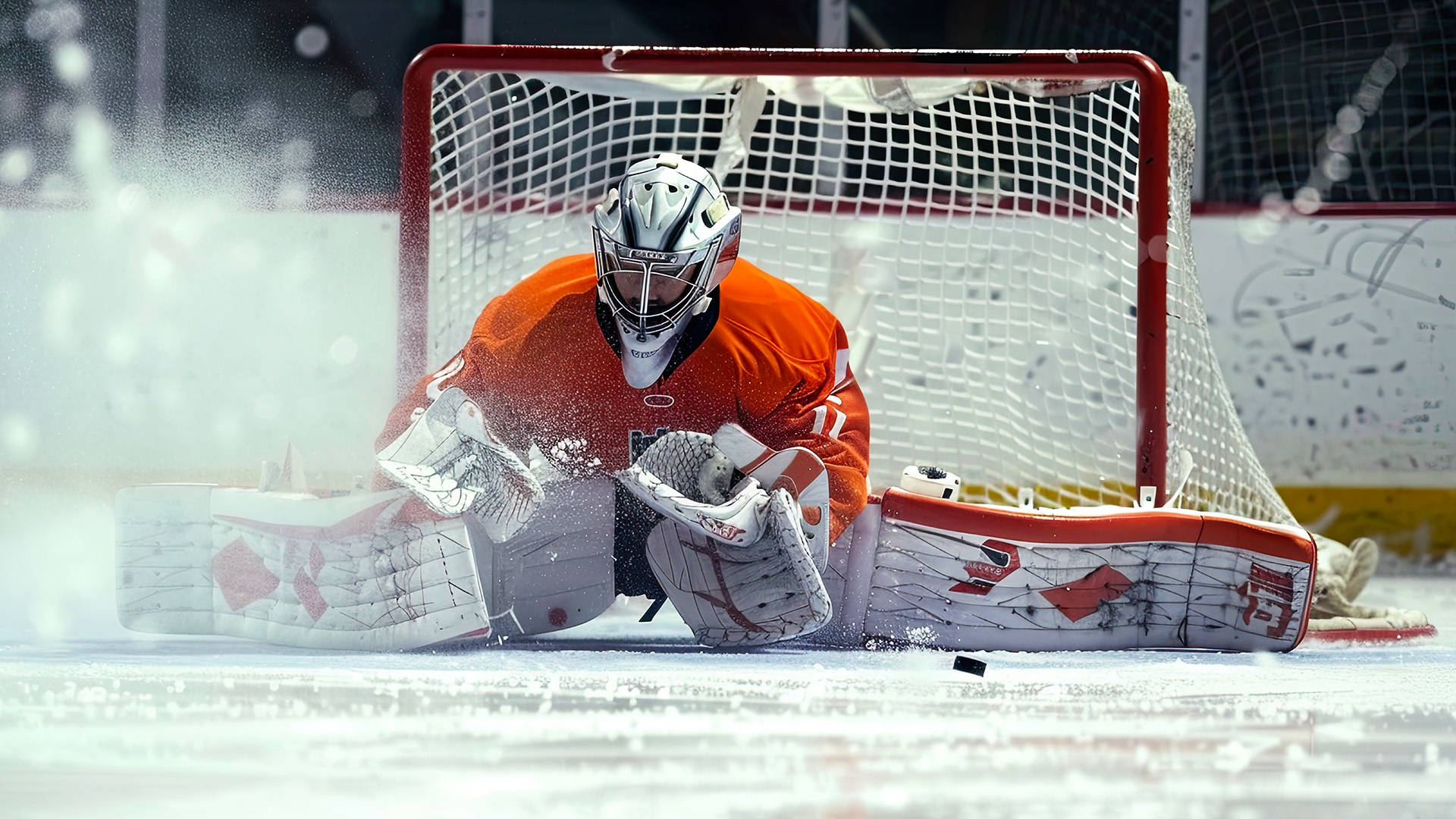
Standout Performances from NHL Goalies throughout History
Across the history of the league, certain seasons from goaltenders have stood apart for their control in the crease and their steadiness under pressure.
The best NHL goalie performances tend to share similar traits, whether they came in the early days of the Original Six or in today’s quicker, more demanding game.
Some seasons became part of the league’s record books, while others were defined by timely stops and long stretches of reliable play.
In this feature, we look at the seasons that left a lasting mark on the sport and show how these goalies reached a level that still gets talked about, even decades later.
Dominik Hasek, 1997-98
Dominik Hasek’s 1997-98 campaign with the Buffalo Sabres remains one of the clearest examples of a goaltender carrying a heavy workload while staying remarkably efficient.
Hasek appeared in 72 games and produced 13 shutouts, with six coming in a single month, a run that tied an NHL record. The Sabres star’s season was defined by a 2.09 goals-against average and a .932 save percentage, numbers that stood out even in a defensively minded era.
Hasek led the league in both major categories, and his impact was recognised with the Hart Trophy for a second consecutive year, along with a second straight Vezina. The player’s unorthodox style relied on agility and anticipation, allowing him to reach pucks other goalies simply couldn’t reach.
Buffalo reached the conference finals that season, and much of that progress came through Hasek’s ability to hold games steady when the Sabres were under pressure. The consistency Hasek showed across such a demanding schedule is a key reason this season remains a benchmark for goaltending excellence.
Bernie Parent, 1973-74 and 1974-75
Bernie Parent reached a level across these two seasons that few goalies have matched. In 1973-74, the Hockey Hall of Famer played 73 games and set the pace with a 1.89 goals-against average and a .932 save percentage, along with 12 shutouts. Parent’s 47 regular-season wins set a new single-season record, and that consistency earned him the Vezina and a strong showing in Hart Trophy voting.
Parent’s influence became even clearer in the playoffs, where he guided Philadelphia to the Stanley Cup and claimed the Conn Smythe Trophy. The veteran goaltender carried that same rhythm into 1974-75, and he repeated many of those achievements, finishing with another 12 shutouts, a 2.03 goals-against average, another Vezina, and a second Conn Smythe as the Flyers defended their title.
The two-year stretch produced 88 regular-season wins and 24 shutouts, highlighting Parent’s importance to Philadelphia during that run. These seasons are still considered among the strongest back-to-back performances by a goaltender in league history.
Terry Sawchuk, 1951-52
Terrance “Terry” Gordon Sawchuk reached a remarkable level of control in 1951-52. At 22, Sawchuk played all 70 of Detroit’s games and finished with 44 wins and 12 shutouts, supported by a 1.90 goals-against average. Those numbers led the league and earned him First Team All-Star honours, along with the Vezina Trophy, which at the time was awarded to the goaltender of the team that allowed the fewest goals.
That form carried into the postseason, and the Detroit Red Wings were able to build on the stability Sawchuk provided. The team went 8-0 through the playoffs and allowed only five goals, and four of those games finished in shutouts. The clean, positional approach Sawchuk relied on gave Detroit confidence in key situations, and the unbeaten run became one of the most striking examples of a goalkeeper controlling a complete playoff campaign.
Sawchuk’s composure in tight moments gave Detroit a level of assurance they relied on throughout the playoffs. The skaters in front of him stayed firm in their structure, confident he would deal with the chances that broke through.
Tony Esposito, 1969-70
Known across the league as “Tony O,” Tony Esposito delivered a rookie season in 1969-70 that immediately set him apart. Esposito became Chicago’s starter early in the campaign and finished with a 2.17 goals-against average and 15 shutouts, the highest total of the modern era. His 38 wins highlighted how often the Blackhawks relied on his measured style, and that consistency earned him both the Calder and the Vezina.
Esposito’s influence showed up in Chicago’s turnaround since the Blackhawks moved from last place the previous season to the top of their division. The Blackhawks rookie’s reflexes and early use of the butterfly technique suited the offensive trends of that era, and the 15 shutouts he produced that season reinforced how difficult it was for opponents to find openings against him.
With a First Team All-Star selection and strong Hart Trophy consideration, that season marked the beginning of Esposito’s rise as one of the defining goaltenders of his era.
Ken Dryden, 1976-77
A season as dominant as Montreal’s 1976-77 campaign needed stability in goal, and that is exactly what anchored their run.
Ken Dryden finished the year with a 41-6-8 record, supported by a 2.14 goals-against average and 10 shutouts.
The team’s defensive numbers were the best in the league, and Dryden shared the Vezina with Michel Larocque as a result. Montreal found a similar form in the playoffs, and Dryden continued to set a strong pace, going 12-2 with a 1.55 goals-against average and four shutouts as the Canadiens secured another Stanley Cup.
Dryden’s presence allowed the team’s attack to play with confidence, and the 1976-77 season became one of the clearest examples of what a composed goalie can provide to a dominant roster. The performance also earned Dryden his third Vezina (he finished his career with five), which made clear how central he was to Montreal’s late-70s success.
Jacques Plante, 1955-56
A defining season in Montreal’s dynasty, 1955-56 showed how much control Jacques Plante could bring to a team already stacked with talent. Plante finished with a 42-12-10 record and led the league with a 1.86 goals-against average. The run also included seven shutouts and the first Vezina of what became a streak of five in a row.
In that season, Montreal finished by securing both first place and the Stanley Cup. Plante’s consistency became a central part of the team’s dominance. His calm, structured approach frustrated shooters throughout the year, and the record of 42 wins stood as one of the enduring marks of his career.
The Hall of Famer’s sharp positioning and steady reactions influenced how later goalies approached the role and helped shape Montreal’s identity throughout that era.
Martin Brodeur, 2006-07
The 2006-07 campaign marked a high point in Martin Brodeur’s long run of dependable play. Brodeur set a new NHL record with 48 wins, surpassing a mark that had stood since the early 1970s.
Brodeur anchored a season where New Jersey finished 48-23-7, supported by a 2.18 goals-against average and a .922 save percentage. The run also included 12 shutouts, the highest total in the league.
With Brodeur maintaining that level across 78 appearances, the season ended with another Vezina and a place among the Hart Trophy finalists. His ability to stay composed under pressure and handle one of the heaviest workloads in the league made New Jersey competitive even in tight, low-scoring games. The New Jersey netminder also led the league in minutes played, finishing the season with 4,697.
Patrick Roy, 2000-01
Patrick Jacques Roy’s 2000-01 season with Colorado showed how effective a composed, veteran goalie could be across a long campaign. At 35, Roy produced a 40-13-7 record that set the tone for his season. He backed that effort with a 2.21 goals-against average, while a .913 save percentage and four shutouts strengthened his place among the league’s most reliable performers. The season also brought a Jennings Trophy and a strong finish in Vezina voting.
Roy elevated his play even further in the postseason, allowing the Avalanche to rely on his experience deep into the playoffs. The player finished with a 16-7 record and a 1.70 goals-against average, with his .934 save percentage strengthening the case for a third Conn Smythe Trophy. Colorado secured the Stanley Cup behind that form, and the year became a clear example of Roy’s ability to rise to decisive moments late in his career.
Tim Thomas, 2010-11
A season built on resilience and sharp form, Tim Thomas’s 2010-11 campaign with Boston became one of the most memorable goaltending runs of the modern era. Thomas set a new single-season save percentage record at .938, surpassing Dominik Hasek’s previous benchmark.
The regular season closed with a 35-11-9 record and a 2.00 goals-against average. Thomas also finished with nine shutouts, with that level of play earning him a second Vezina Trophy and placing him at the top of the league’s major statistical categories.
That standard continued into the playoffs, where Thomas steadied Boston in high-pressure situations. The run included two Game 7 shutouts and a .940 save percentage through Boston’s path to the Stanley Cup. The postseason also brought the Conn Smythe Trophy, making Thomas the first goalie since Bernie Parent in 1975 to claim the Cup, the Vezina and the Smythe in the same season.
With the added distinction of becoming the oldest Conn Smythe winner at the time, the 2010-11 season remains a defining point in Thomas’s career.
Carey Price, 2014-15
Across the 2014-15 season, Carey Price delivered the kind of control and consistency that shaped nearly every game Montreal played that year. Price finished with 44 wins, supported by a 1.96 goals-against average, a .933 save percentage and nine shutouts. The win total set a new franchise mark, surpassing the long-standing records held by Jacques Plante and Ken Dryden.
Across the full stretch from October through April, Price’s form never wavered, and the season finished with him collecting the Hart and Vezina awards, along with the Ted Lindsay and the Jennings. Montreal relied heavily on his sharp positioning during close, low-scoring games, and Price’s steadiness became a central reason the Canadiens secured a division title and one of the league’s best overall records.
Even though the playoff run ended earlier than expected, the regular season was widely recognized as one of the finest delivered by a goalie in the modern era.
Honourable Mentions
Some seasons delivered exceptional consistency or rare statistical marks but didn’t appear in the top ten for different reasons. These campaigns still form an important part of the wider picture of elite goaltending:
- George Hainsworth, 1928-29: Hainsworth played every game for Montreal and finished with 22 shutouts and a 0.92 goals-against average, marks that still stand. As this came in a lower-scoring era with different rules, the season sits outside the main list, but the shutout record remains a landmark achievement
- José Theodore, 2001-02: Theodore led the league with a .931 save percentage and closed the year with both the Hart and Vezina, carrying Montreal through a tight season. The shorter postseason run and the fact that Montreal entered the playoffs as an eighth seed place it outside the top ten, though the impact Theodore had on that season remains significant
- Roberto Luongo, 2003-04 and 2006-07: Luongo produced elite numbers in Florida during 2003-04 despite facing a historic number of shots, then followed it with a 47-win season in Vancouver in 2006-07. Neither campaign resulted in major team success or a Vezina, and because of this, they sit slightly lower, but both seasons showed how much influence Luongo brought to difficult situations
- Igor Shesterkin, 2021-22: Shesterkin’s 36-13-4 record and .935 save percentage stood out in one of the highest-scoring eras in league history. Since the workload was lighter than others on the main list and did not include a championship, the season remains short of the top tier, though the level of play drew comparisons to several past greats