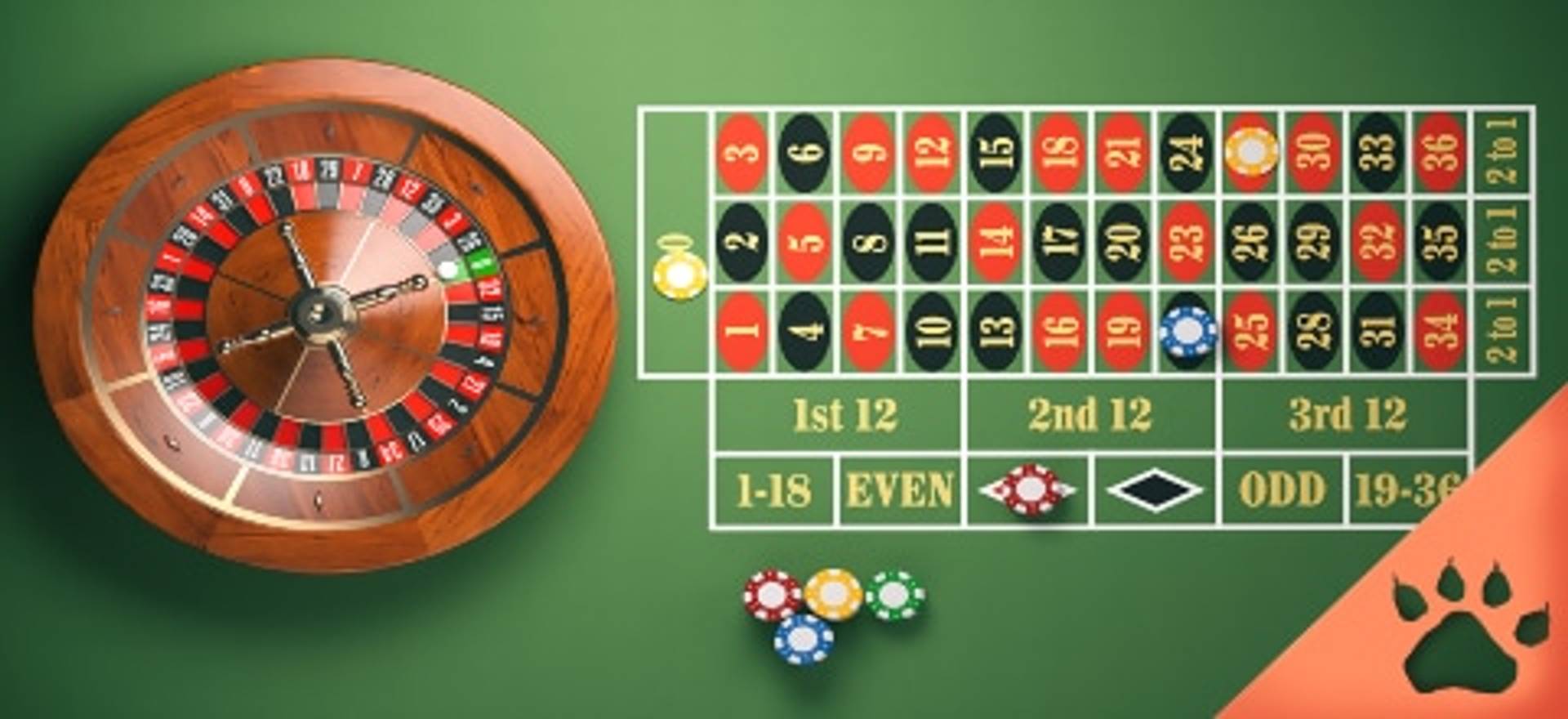
How to use Martingale Strategy in Online Roulette
If you’ve ever set foot into a casino, you’ve likely pondered to yourself: could there be a way to beat the system and overcome the odds? Roulette, with its simple rules and distinctive spinning wheel, remains one of the most played games among Kiwi gamblers.
Among these systems, the Martingale strategy is one of the oldest and most widely discussed. Emerging in 18th-century France, the strategy is built on a straightforward premise: after every loss, the next bet is doubled so that a single win restores previous losses and adds a small return. This guide examines how the Martingale system works in roulette and its place among betting systems.
Understanding the Martingale System: The Basics Explained
The Martingale system originated in 18th-century France, initially associated with simple chance games such as coin tossing. The logic carried naturally into roulette because of its straightforward design.
After each loss, the stake doubles, and after each win, the stake resets to its original level. The intent is that a single win clears the sequence and adds the value of the base bet. This seemingly simple cycle is what has kept the system in circulation for centuries.
The Mechanics Explained: How It Works in Practice at the Roulette Table
In roulette, the Martingale only makes practical sense when applied to even-money bets: red/black, odd/even, or 1-18/19-36. These wagers are close to a 50% chance of winning, which makes them the most practical for a progression system.
Starting with a base bet of $5, a loss means the next bet is $10, then $20, then $40, and then $80. When a win eventually arrives, the return offsets the earlier losses and adds the value of the original base bet.
Resetting is the final part of the pattern. After any win, no matter how long the losing streak has been, the stake drops back to the starting amount. This reset keeps the cycle consistent and, in theory, prevents the stake from spiralling once losses have been recovered.
The Theoretical Appeal: Why It Seems Foolproof to Many
The Martingale gains much of its attraction from how the progression looks on paper. Since the cycle promises to recover earlier losses, it gives the impression that failure is only temporary. This outlook encourages the belief that a win is inevitable if the sequence is followed for long enough.
The convincing element comes less from mathematics and more from human psychology. People are naturally inclined to see patterns even when outcomes are random. For example, on a roulette wheel, if the ball lands on red three times in a row, it can create the perception that black is more likely on the next spin. This is false.
The Gambler's Fallacy in Action: Misinterpreting Probability
The idea that outcomes will “balance out” has already been noted as part of the Martingale’s appeal. This reflects the Gambler’s Fallacy, the belief that earlier results influence what happens next.
In roulette, each spin is independent. The wheel does not keep track of past outcomes, and the odds remain unchanged regardless of previous results. On a European wheel with a single zero, the probability of landing on red is fixed at 18/37 (48.65%) every spin. A run of five or even ten blacks in a row does not alter this probability.
This misunderstanding is central to the continued use of the Martingale. The expectation that a win is “due” extends betting sequences, but the mathematics shows that probability does not shift in response to past events.
Short-Term Success Stories: The Anecdotal Evidence
The Martingale system can seem very appealing at first, as the chances of short-term success are higher compared to the many other roulette systems you might be familiar with. As long as you don’t hit a bad run of six or seven reds or evens in a row, the Martingale system appears to work. Long losing streaks, the kind that extend to seven or ten spins, are relatively rare in shorter sessions.
These early outcomes create the illusion of reliability, but the picture is incomplete. What is less often mentioned are the times when the sequence runs into a longer stretch of losses. At that stage, the required bets escalate sharply, often to levels that are difficult to maintain. Records and probability studies indicate that while the Martingale system may appear effective for a while, the longer it is used, the more likely it is to collapse under a prolonged losing streak.
The Inevitable Flaws: Why Martingale Fails in Reality
While the Martingale seems convincing in theory, the reality of roulette play is different. Once put into action, the system meets barriers that weaken the logic it depends on.
The Unforgiving Table Limits: Hitting the Ceiling
A major obstacle for the Martingale in roulette is the table limits. Every wheel, whether online or in a casino, sets both a minimum and a maximum stake. These limits exist to stop the kind of rapid bet increases that the Martingale relies on.
Consider a table with a minimum of $5 and a maximum of $500. Starting at $5, doubling through eight consecutive losses would require a stake of $640. That figure already exceeds the table’s limit. In this case, just seven losses in a row would block the next step in the sequence and break the system.
The Bankroll Barrier: Running Out of Funds
Even without table limits, the Martingale runs into another restriction: the size of your bankroll. The system assumes that doubling can continue indefinitely, but in practice, the growth is so steep that funds are exhausted quickly.
Starting with a $5 bet, ten straight losses would mean the next stake, the 11th bet, has to be $5,120. Covering that full run would take $5,115 in total bets. Maintaining this level of progression is not realistic.
The Myth of the "Due" Outcome: Consecutive Losses Are Common
The idea that a result is “due” often hides how often long losing streaks actually occur. On a European wheel, the chance of losing ten spins in a row is about 0.13%. While that may seem insignificant, probability tables indicate that these streaks do occur, especially over longer periods of play.
Even shorter runs, for example, six losses in a row at 1.74% or seven at 0.89%, happen with regular frequency and are often enough to halt the Martingale at most tables. This is the system’s core weakness. The losing streaks that break the progression are not just possible but inevitable over time, and when they occur, the strategy collapses. It’s not like other strategies, where if you’re successful a healthy percentage of the time, you’re fine. With the martingale system, once it fails, all of your previous successes go out the window!
The Unbeatable House Edge: The Fundamental Truth of Roulette
Every casino game is built with a house edge, the mathematical advantage that guarantees profit for the operator over time. In roulette, this comes from the green zero pocket, and in American versions, an additional double zero. Even when betting on outcomes that look close to even money, the zero prevents the odds from being a true 50/50 split.
In European roulette, 18 red pockets, 18 black pockets, and 1 green zero create a 48.65% chance of success on an even-money wager and a 51.35% chance of failure. This gap establishes a 2.7% house edge. In American roulette, which features both a zero and a double zero, the probability of winning on even money drops to 47.37%, thereby increasing the house edge to 5.26%.
For New Zealand play, the difference is worth noting. European roulette is the most commonly available online version, offering a lower house edge. American roulette also appears in some live-dealer settings. Regardless of format, the edge remains, and no betting progression, including the Martingale, can eliminate it.
Diminishing Returns: Winning Pennies, Losing Fortunes
As already noted, the Martingale can appear to work in the short term, producing small gains before a losing streak sets in. The flaw becomes clear when those runs extend further. Nine or ten consecutive losses push the next stake to unsustainable levels, and the earlier wins are erased in a single sequence. The imbalance between gradual gains and sudden setbacks is what ultimately undermines the system.
Variations and Adaptations: Martingale's Cousins
The Martingale system has inspired several offshoots, each altering how the progression unfolds. Below are variations that either raise the stakes more sharply or shift attention to winning streaks instead of losses.
Grand Martingale: Increasing the Stakes (and Risks)
The Grand Martingale is a more aggressive take on the original system. With each loss, the stake is doubled and then raised by one extra base unit. Starting with $5, the next bet after a loss would be $15, then $35 after the following loss, and so on. This speeds up the progression. When a win arrives, the return is larger than under the standard Martingale, but the trade-off is that bets escalate more quickly. Table limits are reached sooner, and the required bankroll becomes heavier with each step.
Anti-Martingale (Paroli System): Riding the Wins
The Anti-Martingale, or Paroli System, reverses the original idea. Instead of doubling after a loss, the stake is doubled after a win and returns to the base amount after a loss. Starting with $5, a win would raise the next bet to $10, a second win would increase it to $20, and a loss at any point would reset the bet to $5.
This structure is designed to build on winning streaks while containing losses to smaller amounts. The Anti-Martingale does not require the large bankrolls associated with Martingale progressions, but it remains dependent on luck. A single loss ends the sequence, and the house edge is unaffected by the system.
Other Progressive Betting Systems: A Brief Overview
Alongside the Martingale and its variations, other progressive systems have also been applied to roulette. The D’Alembert System increases the stake by one unit after a loss and decreases it by one unit after a win. This produces a slower, less aggressive progression compared to the Martingale system.
The Fibonacci System follows the well-known numerical sequence (1, 1, 2, 3, 5, 8…). After a loss, the stake advances to the following number in the sequence, and after a win, it returns to the previous two numbers. This method spreads risk more gradually but still faces the same mathematical limits as other progressions.
The Labouchere System, also known as the cancellation system, utilises a list of numbers that add up to a predetermined target win. The first and last numbers are added together to decide the bet. A win cancels those numbers, while a loss adds the bet amount to the end of the list. This approach alters the betting pattern, but again, the house edge remains unchanged, as it does with every progression.
FAQs
Is the Martingale strategy illegal in New Zealand casinos or online?
No. The Martingale strategy can be used at both land-based and online casinos in New Zealand. However, table limits and the fixed house edge restrict how effective the system can be in practice.
Can I guarantee a win using the Martingale system?
No. The system may deliver small returns in the short term, but outcomes in roulette are independent and governed by probability. Because of this, no sequence of bets can guarantee a win.
What's the biggest risk of using Martingale?
The main risk is the rapid escalation of stakes during a losing streak. This can result in reaching the table’s maximum bet limit or depleting available funds before the sequence is recovered.
Does it matter if I play European or American Roulette with Martingale?
Yes. European roulette has a lower house edge of 2.7% compared to 5.26% in American roulette. While the Martingale system does not remove the house edge in either version, European roulette is the less disadvantageous option.
If I have an unlimited bankroll, can Martingale work?
In theory, yes. With endless funds and no table limits, the system would eventually recover losses. In practice, bankrolls are always limited, and casinos set maximum bets, so the Martingale cannot truly function in that way.
What's the house edge, and how does it affect Martingale?
The house edge is the built-in mathematical advantage created by the zero pocket. This rule ensures that even on even-money bets, the odds are never a true 50/50 split. Because of this, the Martingale system cannot remove the long-term advantage held by the casino.
Are there any "winning" roulette strategies?
No strategy can consistently overcome the house edge in roulette. Systems like Martingale, Fibonacci, D’Alembert, or Labouchere may influence betting patterns or pacing, but none can remove the mathematical advantage built into the game.
Learn more about various roulette strategies in our guides: